Posted by: betsydevany | December 21, 2009

Take Joy in the Journey

Having returned from Idaho, I reflect on my time in Boise, where I helped to make gingerbread houses, attended The Nutcracker ballet at Ballet Idaho, perfected my Girl Scout salute, watched the movie Up for the third time (cried for the third time), was inspired by nineteen girls to find the true meaning of Christmas, visited the cancer clinic, listened to other people struggling in their lives (hugged them tight), read to my nieces, tended to my sister, learned that my husband was laid off from his job , decorated my sister’s house for the holidays, folded laundry,read to my nieces, loaded the dishwasher, unloaded the dishwasher, danced with my nieces, reorganized the refrigerator, read The Wednesday Wars by Gary Schmidt (laughed and cried), reorganised the laundry room, attended the holiday show put on by first, second and third graders (smiled until my cheeks hurt), read Hush by Jaqueline Woodson, reorganised the craft drawers, watched the film Young at Heart (everyone needs to see this), shopped for party favors for the girls’ birthday party, organized the decoration of the party bags, spontaneously found ways to entertain the girls at the party during a lag in activites (my group was sent to another room as we were having too much fun), and had my first experience climbing a mountain to find a Christmas tree.

Our journey in the mountains of Idaho began in the late afternoon on a Sunday with my sister, her husband, their two young daughters, myself, and Tessa–their very energetic and independant schnauzer. It began with a view of the mountainside, and the knowledge that we had to climb quickly–if we were to avoid the impending loss of sunlight. The girls ran ahead to test the depth of the snow, which was up to their knees. Tessa buried her face in a snowbank, and then shot out of sight. I began to make my way through the snow with my sister by my side. Breathing the fresh air, I realized there were no street sounds: cars honking, music blaring, people shouting. It was remarkably silent, except for the sounds we made.

In that wonderful silence, I began to think about my writing. It kept me moving forward even when the temperatures dropped and my fingertips stung through my gloves, and as I paused to wonder whether the two tiny trees we noticed–in the first ten minutes–might be a compromise for one large tree. But then I remembered my nieces. I remembered my own struggles with writing: how the journey through a first-draft can be long and arduous, and how, no matter what, I continue to write.

I needed to continue to move forward.

My sister was tired. She made the decision to head back down the mountain and wait for us in the car. I promised her I would keep track of the girls and that we would soon return with a tree, not realizing that well over an hour would pass before we would see her again.

Twenty minutes went by. The girls began to bicker. They were cold. And tired. They were worried about their mom at the bottom of the mountainside in the car. They didn’t like that Tessa continued to disappear from our sight.

“We have a tree to find.” I tried to keep my lips from shaking, and wiggled my toes inside my boots to keep them from going numb. “It’s just around the bend. Ahead of us. I can feel it.”

“You said that already,” said Lili.

“Yeah,” said Sofi, “at least three times already, and we haven’t found the right one yet!”

“We will,” I promised. We had to.

The sunlight was fading. The temperature had dropped. The girls’ cheeks and noses were red. Their father was out of sight, though we continued to call back and forth.

I slipped my gloves off and held my warm hands to their cheeks, which were as cold as icicles. “We can do this, girls. For your mom.”

We continued up the  mountainside to find their father. And the reason for this journey: the view ahead of us. A gift we did not expect. 

 Our tree was not far from that view. A tree we carried down the mountainside in the dim light. The girls led us in singing carols, and even when we slipped (more than once), we kept our spirits high. For we had found a tree, and whether or not it was indeed the most perfect of trees, the joy was in the journey.

I was once again reminded of my writing and the journeys I take with my characters. It is important that I make myself stop and take a step back, especially when I have been in the depths of a manuscript for weeks. Only then do I see the view; the true story I was meant to discover.

Take joy in the journey.

Happy Holidays!

Darkness falls as we tie the tree to the car

Posted by: betsydevany | December 9, 2009

An Unexpected Gift

With the constant barrage of advertisements for holiday sales, we have lost the meaning of Christmas.  This deeply saddens me. I will not shop at every given moment only because the media tells me to. Instead of buy, buy, buy, I want to dig a hole in the snow and find a warm bear to hibernate against. Someone can dig me out when spring arrives.

But family calls. I throw the large bag of holiday catalogs into our recycling bin, pack my bags, and head back to Idaho.

Once I arrive in Boise–well past midnight–I have tasks to accomplish. And in doing these tasks, I put expectations on myself: to give my best effort, to remain cheerful and energetic, and to do whatever my sister needs from me to help her and her young daughters through her health crisis.

I have no concept of how much I will get in return.

After five hours of sleep and a neck in spasms from the plane ride, I receive my first surprise gift, befitting for a writer. I am asked to read holiday picture books to a group of eight-and-nine-year-old Girl Scouts–most of whom I’ve never met, once their planned activities are completed. I take the place of my sister, who is one of the troop co-leaders, and obviously unable to attend. There are nineteen girls who feast on pizza, juice, and popcorn, all of which fuels their group energy to a level, which is a little daunting to me. Especially on no sleep. This group is a larger challenge than the room full of young toddlers I had read to at the library last week. But the girls are so charming. They win me over with their smiles and enthusiasm.

The leaders segregate the girls into four groups: learning how to properly break eggs (a class I need to take), decorating cookies, making the sugar cookies from scratch, and a craft activity, which I am asked to run. Being a quick learner comes in handy when you have to teach nineteen kids how to make something you’ve just been shown how to make yourself. The key is to look like you know what you’re doing, and hopefully, you will, soon–preferably before your next group of kids comes running to the craft table. It helps to maintain a level of flexibility, especially when you need to find a quick substitute for Rudolph’s nose. The red hots are not cooperating, which my first group of girls quickly point out to me. I eye the room and remember seeing red napkins when the pizza was being devoured.

 ”Who wants to hunt down some red napkins?” I ask. Five hands shoot into the air. I ask another mother to run the emergency errand. Five hands plunk onto the table.

“But, Mrs. Betsy, the noses won’t stay on.”

“Ah, yes, I kind of noticed that . . . so we have an opportunity here to practice being  flexible and creative. Any ideas?” One hand shoots into the air. Mine.

Red napkins arrive. The errand mom stays by my side for support. I stare at the napkin, willing it to tell me what to do. The clock ticks. I smell the cookie dough. I want to eat some. Then, as in writing, I let go and trust my instincts. I don’t think about it. My fingers tear the napkin into small squares. I ask the other mom to give each girl two pieces. “We are going to improvise,” I tell them, trying to sound confident.

The final red hot, which was hanging on for dear life, slides off its candy cane base and plunks onto the table. The Girl Scouts moan as a group. The situation is not looking pretty. I need to rally the troops. Quickly. I start to sing Rudolph The Red-Nosed Reindeer. My table joins in, softly at first. Next, the cookie decorating station is singing, and then the kitchen class, the egg-breaking class, until no one is silent. We sing as red napkins become noses–scrunched into little balls. Red hots disappear while the girls’ tongues now appear red.

After an hour, the station rotations come to an end. The girls’ aprons are covered in flour. They play horsie. Eat more popcorn. Drop popcorn all over the carpet. Chase each other into the bathroom. Have pillow fights. Their energy level continues to climb. There is no end in sight and all I can think about is how I want to sink my teeth into a sugar cookie, fresh from the oven and coated with powdered sugar frosting.

It is time to do the dishes, clean-up, and gather the girls in front of the fireplace with their sleeping bags to settle down–if this is possible. With my Girl Scout fingers in place (one girl corrects me as I have the wrong salute at first,) I vie for their attention. Three girls respond. My temporary confidence sinks. If I were standing in snow, I would have been up to my thighs. I try again. “Ah . . . Girl Scouts.” Now, ten girls come to the other side. With the help of the troop mothers, the room falls silent. Hope pulls me out of the snow bank and within five minutes, the room is taken over by sleeping bags filled with chatty girls in pajamas, maintaining an energy level, which obviously would have carried them through the entire night until the break of dawn.

I need a nap. A long one.

I move through the crowd of giggling Girl Scouts and attempt to swap places with another mother, offering to clean the kitchen while they tame the crowd. No such luck.

The picture books are pointed out to me. I carefully climb over the girls and sleeping bags and pillows to reach the pile of books, and then climb back across the room and head to the front of the fireplace.

I ponder the noise level. I ponder the selection of books to read to this group.

I ponder an escape route.

And then I remember my expectations of coming to Idaho: to help my sister and her family welcome in the holiday.

I ask for quiet. The laughing, whispering, and giggling continues. I remind myself, Betsy, you are a writer and a reader and you can do this. Don’t think about their age level. Just read.

I hold up the Girl Scout salute–no correction needed this time. The girls begin to settle down. I hope my two nieces won’t consider me an embarrassment when I warm up the audience by telling them a few stories about the toy store where I work; about the ducks who occasionally wander into the store; about Norman, the gorilla, who now lives with me. There is a moment of silence. I seize the opportunity and begin to read The Night Before Christmas. This edition is a pop up book.I read, using different voices. Santa’s deep voice. My narrator voice. The nineteen girls are now snuggled into their sleeping bags, their heads on their pillows. Many hug beloved stuffed animals.

Is this possible? Can a simple, well-known story capture the attention of a group of energetic girls, seemingly too old to be read to from a picture book meant for a younger audience?

Yes, it is possible.

The girls are a captive audience. I pick up The Polar Express and began to read. Not a word is spoken, though their eyes sparkle. Eyes which say I believe.

I reach the part in the book where a crowd gathers in town to await Santa’s arrival. I pause for effect. Then with one arm raised, I play Santa presenting the first gift of Christmas. Though it is I who receives the gift.

For at last, once again, I hear the ringing of the bell.

Thank you to Boise Girl Scout Troop #131 and to all the Mom Elves.

Posted by: betsydevany | December 1, 2009

Lessons From the Library

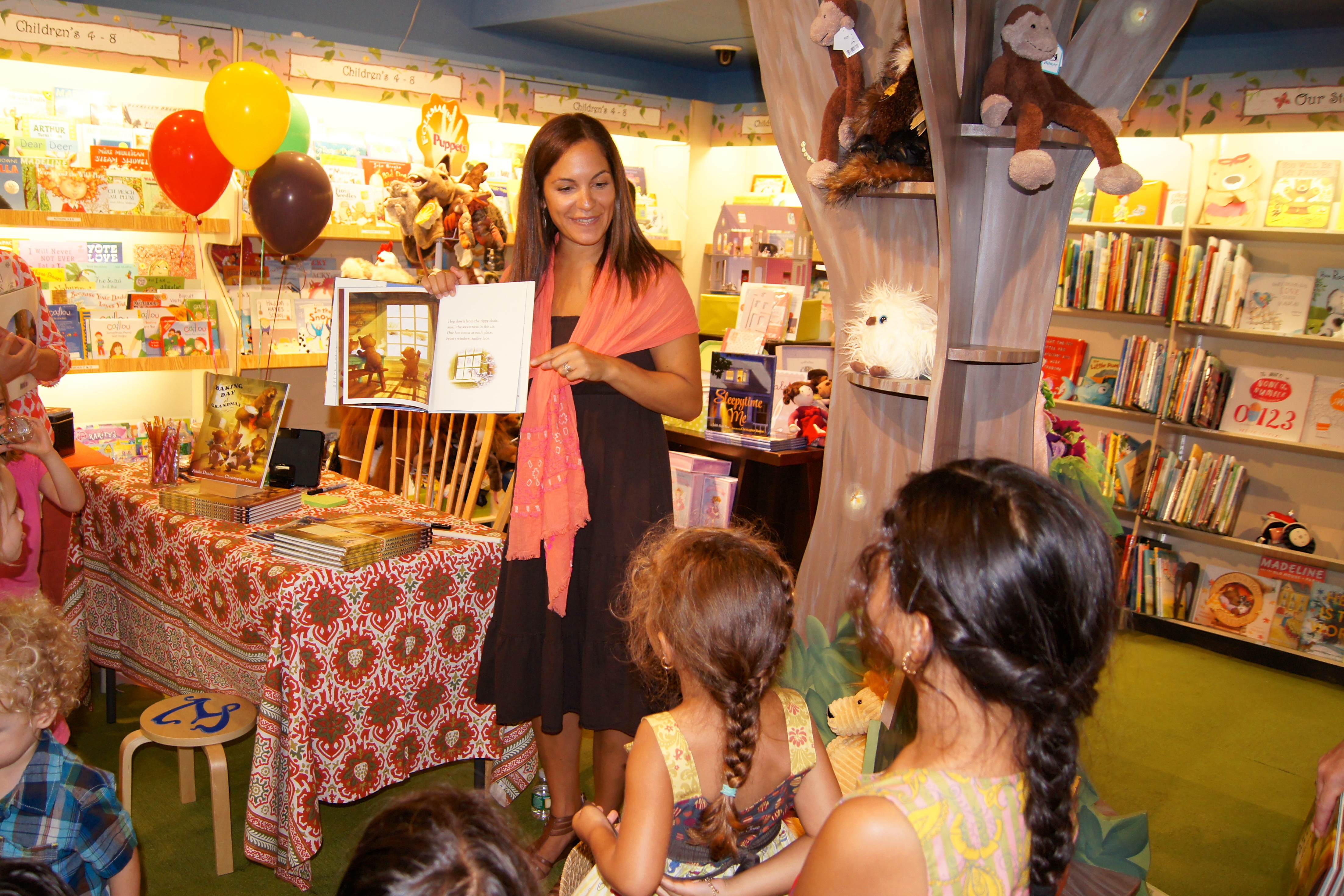
Thank you to all the children and adults who braved the rain last night to attend the Groton Public Library Lullaby Concert; to Judith and Miss Vicky for arranging these events, and supplying the holiday treats; and a special thanks to the little ones for becoming such great “wild things” during my reading of  Where The Wild Things Are.

Reading to kids is a wonderful experience, and never knowing what the overall age of my audience will be keeps me on my toes. In writing for children, you must always keep the child reader or listener in mind, and this applies to reading to large groups of children as well. 

What I’ve learned through my own experiences from being a volunteer reader:

1. Come prepared with books for a variety of ages. If the overall group consists of more toddlers, read the shorter books with less text.

2. Make sure to include books which allow the kids to be involved, either through making sounds or answering questions. Kids want to be a part of the reading and should not be expected to passively sit for forty-five minutes.  Respect their needs.

3. Pay close attention to the energy level of the group. If the kids seem restless, encourage a stretching break. Get them to stamp their feet, stretch their arms, and to get their wiggles out.

4. Appreciate your audience.

5. Bring stickers to give the kids at the end of the concert. This way you can greet them personally and thank them for coming.

I look forward to my next appearance with the lovely Barbara Harvey on guitar.

Posted by: betsydevany | November 20, 2009

Upcoming Library Appearance

My next appearance at the Groton Public Library will be on November 30th. 6:30 pm. The talented Barbara Harvey will join us. She is a guitarist and singer. Norman, my gorilla friend, is already planning what he will wear. My three-year-old granddaughter, Ava, has requested to have a seat up front, next to me. When I asked her about this, she said, “Decuz, Norman needs me.”

“Why?”

“Grandma, you are so silly! You tagots Norman is berry shy,” Ava said, “He needs me to hold his hand.”

At his last library appearance, Norman  danced with the kids, and Barbara let him use her guitar, while Ava watched from afar.

“Do you need to hold Norman’s hand?” I asked Ava.

“Yes, Grandma. I want to make friends with the other kids.”

During his years of working at the toy store, Norman helped many children who were shy. And even after retirement, I see that he continues to do this, wherever he goes.

“Ava, if you sit in the audience, you will be next to other children, and you can still be near Norman.”

She furrows her brow and walks over to Norman, who is sitting on our couch.  Ava whispers into his ear, and then presses her nose to his. “Okay, Norman?”

“Grandma, he says if he gets scared, you can hold his hand.”

“I will,” I say, winking at Norman.

For more information on the Lullaby Concert, click on the links below:

http://www.town.groton.ct.us/library/childrens/programs.asp   or   http://www.americantowns.com/ct/groton/news/november-lullaby-concert-at-the-groton-public-library-231188

http://normanthegorilla.wordpress.com/

Posted by: betsydevany | November 12, 2009

From Baa Creations to Writing For Children

026_26

For twenty-three years I designed appliques for infant and children’s clothing. Ducks. Baby giraffes. Cows.  Bears sleeping on the moon. Bunnies. Lobsters. Crabs. Penguins, and whatever unique design a customer asked me to do.  Special requests always stirred my imagination, and led me to work with different fabrics and designs beyond what I would have ordinarily done.

I specialized in making matching baby gifts (bibs and hooded towel sets, etc.) as well as coordinated clothing for siblings. From newborn babies to pre-teens. I traveled many weekends to sell my work at craft fairs–as far away as Virginia. I personally cut and sewed 12,000 to 15,000 appliques per year. And as exhausting it was, I loved the work. Plain and simple. Financial aspirations–aside from supporting my children and having the ability to stay home with them–never drove my business.

My greatest joy came from meeting and getting to know my customers. Watching their babies grow out of my bibs and holiday sweatshirts, until my creations no longer met their needs. Yet, customers would still come by my booth to say hello, and I will always remember those small gestures.

I miss the personal connection. The frantic calls from a parent to make a beloved dress in a larger size, because their daughter can barely squeeze into the one I made her two years ago, and she refuses to hand-it-down to her younger sister.  I miss entertaining the young children while their parents searched my racks. I am not one to sit around and do nothing, so I always brought cutting work with me, wherever I went. If their parents needed more time, I let the kids count or sort my piles of duck pieces, lobsters, etc., or help me put more bibs on display.

And yes, some of my experiences from the business have found their way into my writing.

I still make my creations–on a limited basis–for a handful of gift shops, and for customers who call me for handmade baby gifts. But now, my solitary creative time  is no longer spent at a commercial sewing machine, but rather at a computer, or sitting in my writing room with a notebook on my lap.  Instead of ironing pellon to fabric, cutting shapes out for two hours each night, and sewing for six hours per day, I read and write. I listen to my characters. I apply the skills I developed while running a business out of my house.  My work process, including my passion, remains the same. Only the outlet has changed.

Children’s publishing is a business. While it could not exist without the multitude of creative talent, it also would not survive without the business aspect.  Baa Creations taught me that creativity alone is not enough. Designing for children was the trajectory to writing for children of all ages, yet the skills needed to sell and promote my creations were just as important. Truly loving what I did made my business flourish naturally.

My clothing business prepared be for writing in more ways than one, and taught me important lessons: Be resilient. Foster patience and persistance. Recognize your inability to please everyone at all times. Be gracious to those you can’t please, and grateful for those you can. The importance of self-promotion, maintaining mailing lists, and staying in touch with customers about upcoming events. How to deal with rejections in a non-personal way. Appreciate your mentors. Listen with an open mind, and apply any advice to your  work with a positive attitude. Always be willing to try something new, even if you don’t agree. With time, you may. Be thankful for your gift. Remain humble. Keep learning. Work hard at your craft on a daily basis. Don’t be hard on yourself when you fall off task. Find your personal style and voice, and be true to that.

Never give up.

To all my past Baa Creation customers. Thank you your kindness, your support, and mostly for understanding when my heart and passion sent me in a new direction.  I look forward to seeing you in the future as a writer.

Posted by: betsydevany | November 5, 2009

What is CWORS?

CWORS

abbr. 

1. Children’s Writer Obsessive Revision Syndrome

This is the place where a children’s writer is stuck. On one page. One paragraph. One sentence. And while meticulous revision is necessary, there is a point when you cross over into CWORS. How do you know when you have left your editorial mind behind and fallen victim to the critical voice?

1. Your eyes are glazed over. 

2. You have spent the last three hours or worse, three days, reshaping a single page–or three pages, if you are preparing a submission for the Rutgers One-on-One Conference.

3. You have sent your critique partner, or whoever might read your work, twelve different versions of the one page. In one afternoon. Of course, with multiple thank-yous generated across the body of the e-mail.

4. Your reader has stopped responding through e-mail. You dial the phone and get a busy signal. You come to the realization that they may have taken the phone off the hook to save themself from your babbling.

5. You close the file and decide to fold the laundry.

6. You fold one shirt, and then open up the document again.

7. You read your one page and sincerely think you know the answer to the problem, but you can’t truly identify the problem.

8. You spend another two hours, swapping words and phrases, and in the end, you revert back to the original, which hopefully you have saved as a separate document.

9. Except for an empty box, you have no concept of how many crackers or cookies you’ve nibbled on for the better part of the day.

10. You curse at the empty coffee canister.

In my case, when I first noticed the symptoms, but didn’t recognize their meaning, I called my father. He has been a writer for over fifty years and since I have embraced writing for children, he has offered me words of wisdom. Sparingly. One of his favorite phrases is: Dangerous Mind. The mind you slip into when CWORS takes over. In a sense, you become dangerous to your manuscript, and more importantly, to your characters.

I had slipped into a state of obsessive revision without knowing why or how I had gotten there. And when I tried to share with my father, one of the twelve newer versions, he stopped me. “Whatever you do, don’t read another word,” he said, “You are a danger to your work in this frame of mind.”

“What frame of mind?”

“The place where you are right now. Revising over and over,” he told me. And then, he offered me five words. “Back away from your manuscript.” Nothing else.

On that day, I learned how to recognize the symptoms of CWORS. They do not often appear, but when they do, I now know how to react accordingly. Along with the date on which CWORS began to take over on a particular piece of writing, I write myself a note and promise that the work will remain untouched for a period of time. In general, two weeks.

And then, I back away from the manuscript, call my dad, who is my sponsor for CWORA (children’s writer obsessive revision anonymous) and thank him.

Posted by: betsydevany | October 27, 2009

Vote For Spoonfuls of Stories

Today, at the pediatrician’s office, I tried to keep Ava from being preoccupied with the tick on her arm. Or what was left of the tick. They are tenacious insects, especially when faced with a pair of tweezers coming their way. But when neither the tick nor the tweezers completely won the battle, I went for back-up in my war against ticks. 

Before I could even meet with my back-up (Ava’s doctor) I had to find a safe place at the office. A place which wasn’t filled with enticing toys or puzzles or anything else she would want to play with that very instant. I also wanted to steer her clear of coughing, sneezing, and children who might have had fevers. 

“But, I want to play, Grandma,” Ava said.

“And I don’t want you to get sick,” I told her.  Her hand in mine, we walked by people discussing the flu vaccine. Parents cuddling sick children on their laps. Play areas with breeding germs, until finally, I found a small room with a basket of books. No other children.

I put Ava on my lap and leaned towards the basket. I grabbed a selection of books, and from the size of most of them, I knew they had come from Cheerio boxes.  As I began to read to her, I remembered I had not placed my daily vote for the 2010 Cheerios’ boxes.

Once again, Cheerios will put children’s books into their cereal boxes. And you can vote for the title you want to see. But not for much longer.  http://promo.simonandschuster.com/cheerios-poll/poll.php While there is still time, support children’s books and the wonderful authors whose books are being considered.

I have been voting each day. And today, I thought I’d ask Ava her opinion. I think she would have done anything to get out of the doctor’s office, but really, anytime I mention going to the library, she runs to the car.

We have already read some of the picture books being considered, so we went to the library to get the rest.  After reading the ones Ava had not heard yet, I clicked on the link to vote. Today, Ava voted, though secretly, I would have chosen the same one.

Read about The Cheerios Spoonfuls of Stories Program. http://www.spoonfulsofstoriescontest.com/about_cheerios_spoonfuls_of_stories/

Posted by: betsydevany | October 22, 2009

How Life Works in the Mind of a Three-Year-Old

Last Friday, while I was driving to the park, my three-year-old granddaughter announced there would be a change in our weather conditions. “Grandma! Guess what! It is gonna snow tomoooorrooooow.”

“It is?!” I adjusted my rearview mirror so I could watch her facial expressions. She was obviously excited. The front passenger seat jiggled every time she danced her feet against it.

“Yes, Grandma. It is! Tomorrow!”

Being the middle of October, I was very curious. Especially since the temperature outside has stayed in the high fifties. Had I missed an emergency weather warning? “How do you know, Ava?” I asked.

“Decuz, I do.” More dancing feet. “And . . . we needs buttons.”

“Grandma has lots of buttons.”  I told her. More importantly, we needed milk and bread and eggs and anything else people rush off to buy at the first mention of an impending snowstorm. I changed the direction of the car and headed towards Stop and Shop, in an effort to beat the lines.

Ava picked up her two plastic horses and made them dance on her lap, up and down the straps on her car seat, and across the window. I hoped they weren’t scratching the glass. She stopped. “We needs to get carrots and raisins,” she told me.

“What for?”

“The snowman I am going to make. And the snow baby and the snow unicorn and the snow dog and the snow mommy and the snow daddy and the snow kitty and–”

I stopped at the red light, turned my head, and studied Ava. “Are you sure it will snow tomorrow?”

“Uh-huh.”

“How do you know this?” I asked.

Ava beamed. “Silly Grandma, it is gonna snow tomorrow . . . decuz I gots to make a snowman.”

The traffic light was now green. The person behind me honked their horn. I put my foot on the gas pedal and begin to laugh. Ava laughed, too.

“I guess we need to buy raisins and carrots at the store,” I said.

“Yes, Grandma. And a scarf and mittens. And bagels, cuz my tummy is saying it is berry, berry hungry.”

In the eight minutes it took us to get to the grocery store, I thought about her mind. How it worked. How she believed it would snow tomorrow, only because she needed to make a snowman. This is why–in addition to novels–I write for young children. Their world is marvelous and innocent. Rich in wonder and imagination and possibilities. A place in which the simplest of things can evoke pure joy. Rocks. Bird feathers. Pinwheels. Rainbows. Buttons and raisins and carrots and fresh snow, which together create a simple snowman.

And maybe it will snow in the middle of a warm October. If it does, I will make a snowman, too.

Posted by: betsydevany | October 16, 2009

Betsy’s Wild Things Window

DSC03537

Every few months we have to create a new window display at The Toy Soldier. With the release of a movie based on one of my favorite picture books, Where The Wild Things Are by Maurice Sendak, I got the green light to do a Wild Things window. My one challenge was to not spend any money on display materials. I do love challenges, almost as much as revisions.

When I create a new display, I first walk around the store to see what tie-in products I can use. Do we have extra copies of the book to use in the window? Are there enough stuffed creatures to display, while leaving a sufficient quantity accessible for selling. I need ground coverage, objects to frame the window, and enough product to create a barrier to keep the children from climbing into the space and knocking everything down. Why? They want to ride the rocking horse or play the child-size piano or hug the giant polar bear or press their nose against the window to watch the ducks, which would require they plow through the toys across  the wooden platform, and all in a matter of two seconds. This has happened before. You usually hear the commotion before you confront the actual damage. Then you check that the child or children are unharmed, return them back to the adults in charge, walk down the ramp to the register, pop an aspirin or two, hope a school bus isn’t going to pull up at any second to release a group of teenagers, who will storm into the store and grab all the pop-guns, and then take a deep breath. Well, maybe this window wasn’t exactly right.

Once I gather several copies of the book and stuffed characters, I begin to tear down the existing display. I shelve the product, sweep the wooden platform, wash the window, run outside to keep some kids from terrorizing the ducks outside, and tap into my creativity.  Don’t go out and buy anything. Hmm? My brain starts to click. I see things in my house that would work great. After confirming I can leave the other employee at the store, I dash home. Pull boats and plastic fall leaves out of my everything-I-don’t-know-where-to-put-or-don’t-have-time-to-deal-with room and throw them into my car. I remember a stool my daughter had and no longer wants, fabric in my sewing room, plastic vines. Two blocks from my house, I remember the wooden crate. I turn the car around.

With my trunk full, I drive back to the store with thoughts pinging within my brain. I am excited. The concept for the window takes shape.

Back at the store, I begin to design the window; drape fabric over the boxes, twist the vine around the window frame. Check the order of events within the book. Create the story from beginning to end, from one side of the window to the other.

The window complete, now all I have to do is convince young children that “Yes, this is not a new movie which someone recently wrote. This started with a book. A marvelous book by Maurice Sendak, which you must read.” And so, I read it to them. They leave with smiles on their faces, bags with purchased copies, while roaring “You are a wild thing.”

When the day has ended and the pop-guns  are neatly lined up, I step outside and admire the new window. I say thanks for the opportunity to be able to work at The Toy Soldier. It is a place where magic and creativity and the love of children’s literature all come together. DSC03513DSC03517DSC03519DSC03529


Posted by: betsydevany | October 13, 2009

New Jersey Mentoring Workshop-Oct. 09

Kathy Temean and Laurie Wallmark are exemplary models of how to create a welcoming environment for aspiring children’s writers.  The NJ Mentoring Workshop–where we all had the privilege of getting to know Editor Eve Adler with Henry Holt, and Associate Editor Lisa Yoskowitz with Dutton–was a success, largely due to Kathy and Laurie, who work diligently behind the scenes. Not only was the weekend filled with learning, critiquing, brainstorming, sharing of knowledge, laughing, and of course, indulging in desserts (Oh . . .  for another slice of that pumpkin pie . . . a piece of the chocolate cake with white icing . . .) it had a special quality this time. A quality that speaks of the overall attitude of the participants.

When you have the fortunate experience of being in a large critique group–in which self-doubts and insecurities are left at home–you find yourself in the midst of writers who genuinely want to improve their own manuscripts, as well as support the continued growth of their fellow writers. What worked in a particular manuscript and why?  Where was there room for improvement? The group in which I had the pleasure of being a part of became so enthusiastic that an energy of ideas seemed to wrap around our cluster. I apologize for spontaneously jumping up with pure joy at the spark of an idea to help the manuscript in discussion at the time, but that is how my brain works. I get excited when I see possibilities within a story.

Alas, if only everyone lived closer. 

DSC03713DSC03692DSC03693DSC03697DSC03700

Older Posts »

Categories